
Born Beautiful
and beautiful at any age

Warm welcome to new subscribers of Some Glad Morning! Here you will find personal stories of insight and transformation from my musical work with elders.
Note: I first wrote this piece during Covid lockdown, when I sang to elders remotely from tablet rather than in person. They could only see and hear me through their screen.
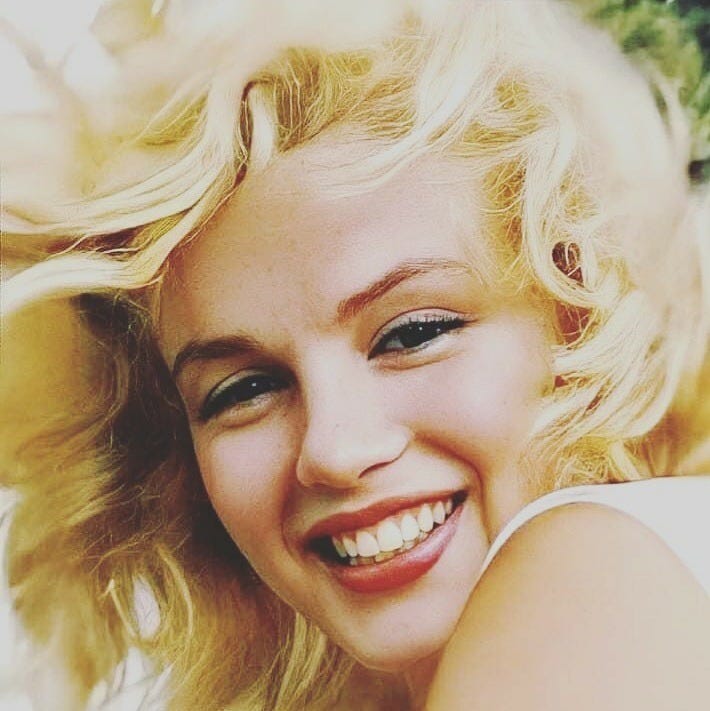
Before I even have a chance to say hello, Harriet says, “I was a blonde, born that way.” An image of a woman with wavy blonde hair flashes into my mind: a young Marilyn Monroe. “In my day, that’s what every girl wanted to be: a blonde.” I imagine Harriet as a teenager—head tilted back, laughing red lips shining in the sun as she waves from a vintage convertible.
They used to say blondes have more fun. Maybe that was true!
Now Harriet is 105. Her blonde days are long gone. Today, her hair is flat and white as copy paper. Her face is mapped with tiny lines. But as my once-blonde sister says, “once a blonde, always a blonde!” Even as blonde hair becomes light brown in young adulthood, then grey in middle-age, and finally a brittle white—she’s still “a blonde.” For Harriet, like many others, blonde has been part of her identity, a way of defining and claiming her place in the world. She may have been a Presbyterian, a mother, a Republican, maybe a Seahawks fan—any number of possible identifiers—but she is still a blonde at heart.
“But you are not a blonde, you are… you are…” she declares, pointing a shaky finger at my face in her screen. “I am a brunette,” I say, as she struggles to extract the word from her memory banks. I had to pull it up and dust it off myself, because nobody uses the word “brunette” anymore. It was never a descriptor of my identity.
“Yes, that’s it, a brunette,” she says leaning back with relief. “I was born a blonde,” she adds.
Harriet pauses in thought and then asks, “Did you ever peroxide your hair?”
“No,” I say.
“That’s good,” she says, nodding firmly her approval.
Harriet scrutinizes me, her eyes narrowing. Maybe she thinks it is admirable that in the face of such extreme social pressure any mere brunette could resist becoming a blonde! Or perhaps she did not approve of “bottle blondes” stealing the glory from “real” blondes like her.
“Actually, I never wanted to be blonde,’ I say. “But I bet the boys lined up for you!”
She gives me a sly smile. I have hit the nail on the head. “In her day,” as she puts it, Harriet was a beauty.
But I don’t say that to her. I don’t want to say that she was a beauty only in her blonde days—her younger days. I sense another kind of beauty in the woman I see on my tablet. True, young people are beautiful in a way that old people are not. At the same time, I know that beauty is more than youth.
Beauty. It is a concept so many girls and women struggle with, generation after generation, throughout our lives. When I was 14, I did an inventory of every part of my face and body. Standing in front of my mirror, I decided that the only part of me that could be called “beautiful” (or even acceptable) were my long eyelashes.
My mother would not allow me to wear makeup, but when I put on mascara at my friend Debbie’s house, my lashes were so long they made marks on my glasses. Debbie thought my eyelashes were perfect and the envy of any girl. And that was coming from Debbie who was gorgeous herself! So, I grudgingly put my eyelashes on the “plus” side of the ledger. Maybe, just maybe, my wrists were ok, but they were probably too thin. I felt a strange satisfaction upon completing brutal task.
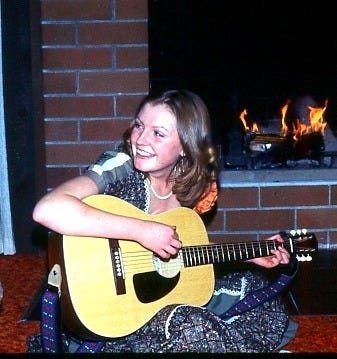
That was over fifty years ago. Our society still does not support adolescent girls in accepting (let alone celebrating) the physical and emotional changes of growing into womanhood. We do not offer a healthy template for embracing or understanding beauty in all its aspects. Sadly, self-hatred is still the norm. Now girls use filters on their phones to widen their eyes, change the shape of their noses or otherwise “improve” their looks before using their devices. I imagine there are apps to make it even easier to obsessively detail all their “faults” as I did. Far too many go even further into self-harm. They want to fit into the world, to find their place, as is natural at that age. But the world provides only poor choices.
On the far end of the age spectrum, most women continue to care about beauty. We still want to look and feel as good as possible—not just for other people, but also for ourselves.
Last week I helped my 92-year-old mother with a new hairdo. She had not had a haircut for a year (due to Covid). I thought we could frame her face better by putting part of it up in a clip. Her hair is lovely—soft, wavy, and white. When I was done, she was delighted.
“This makes me feel so much younger!” she said, turning her head from left to right to see each side in the mirror. “I didn’t want an old lady haircut!”
Mom still cares about being attractive. She’d still prefer to look younger.
I am the same way, and that is fine. I still henna my hair to cover the grey, I still wear makeup to work, I take care with my clothing and hair. My mother and I both know that real physical beauty comes from health, so we take care of our bodies.
When I sing to women much older than myself, I often sense their delight in what they see as my relative youth and beauty (though I am “no spring chicken”—I’m in my 60s.) Sometimes they seem to see me as a beloved daughter who they are proud of.
On rare occasions, they seem irritated or threatened by me. This rivalry can be a deep part of women’s relationships with each other: sometimes we are sisters, sometimes we are mothers or daughters, and sometimes we are in competition. As an elder arts practitioner whose job is to uplift and bring joy, I am mindful of this dynamic and do everything I can to steer clear of it.
But even though Harriet had begun our session wanting to discuss and compare physical appearances with a bit of that competitive vibe, she lets go of that train of thought once the music begins. We float together to a different encounter with beauty, from the visual realm to that of music. She closes her eyes and smiles, murmuring, “oh you have such a beautiful voice!” and “this sounds SO good!” over and over, while I am singing. Has she forgotten that I can hear her too, that I’m not just a TV show?
It is as if the music is massaging her body, bringing her waves of physical delight. I sing some songs from her youth, like “Side by Side” and “Sentimental Journey.” Harriet soaks it in like July sunshine.
“I can’t sing myself!” she confides between songs.
“You don’t have to sing. Just listen. Just relax and enjoy yourself!” I say.
After hearing “Shenandoah,” Harriet says, “You were put on this earth to do this. You have such a beautiful voice. And you are beautiful too. You must bring this beauty to the world. You are blessed: make use of it. Make use of it.” For an instant, I feel I am hearing someone channel a higher power. I write down what she says. It feels like a prophesy, a message I must heed.
Then she says, “Me—blech. I am not beautiful.”
This wrings my heart, especially after what she has just given me. Harriet is processing the grief of her lost beauty and youth, which is so hard to do at any age. I am going through this too, and the losses will only increase.
The Dukka (suffering) of aging, as the Buddha called it, comes for us all.
I say, “Harriet, I am here for you, right now in this moment. I promise I will bring beauty to the world to the best of my ability, for as long as I can. We women are all beautiful, at every age. You just gave me such wisdom! I need you to remember that you are beautiful too!”
Although straight from my heart, it may be a difficult thought. I am unsure if it can get through the barriers of dementia, technology, and hearing aids. Can she understand a concept of beauty that has nothing to do with physical appearance? It would be so much easier if I could touch her hand with mine, look into her eyes, breathe together in the same space. But, Covid.
Harriet is very still for a moment. She nods and says solemnly, “I will accept that, thank you.” Harriet has heard me.
She has moved from remembering her glory days as a blonde to a profound realm outside the jewel box of beauty. We have touched a numinous space having nothing to do with blonde or brunette, youth or age, or even time. True beauty is simply love. We are most beautiful when we are authentic, our hearts open to each other in one precious, unique moment.
We are most beautiful when we shine our own light, sing our own songs, and channel pure love.
April 2025 update:
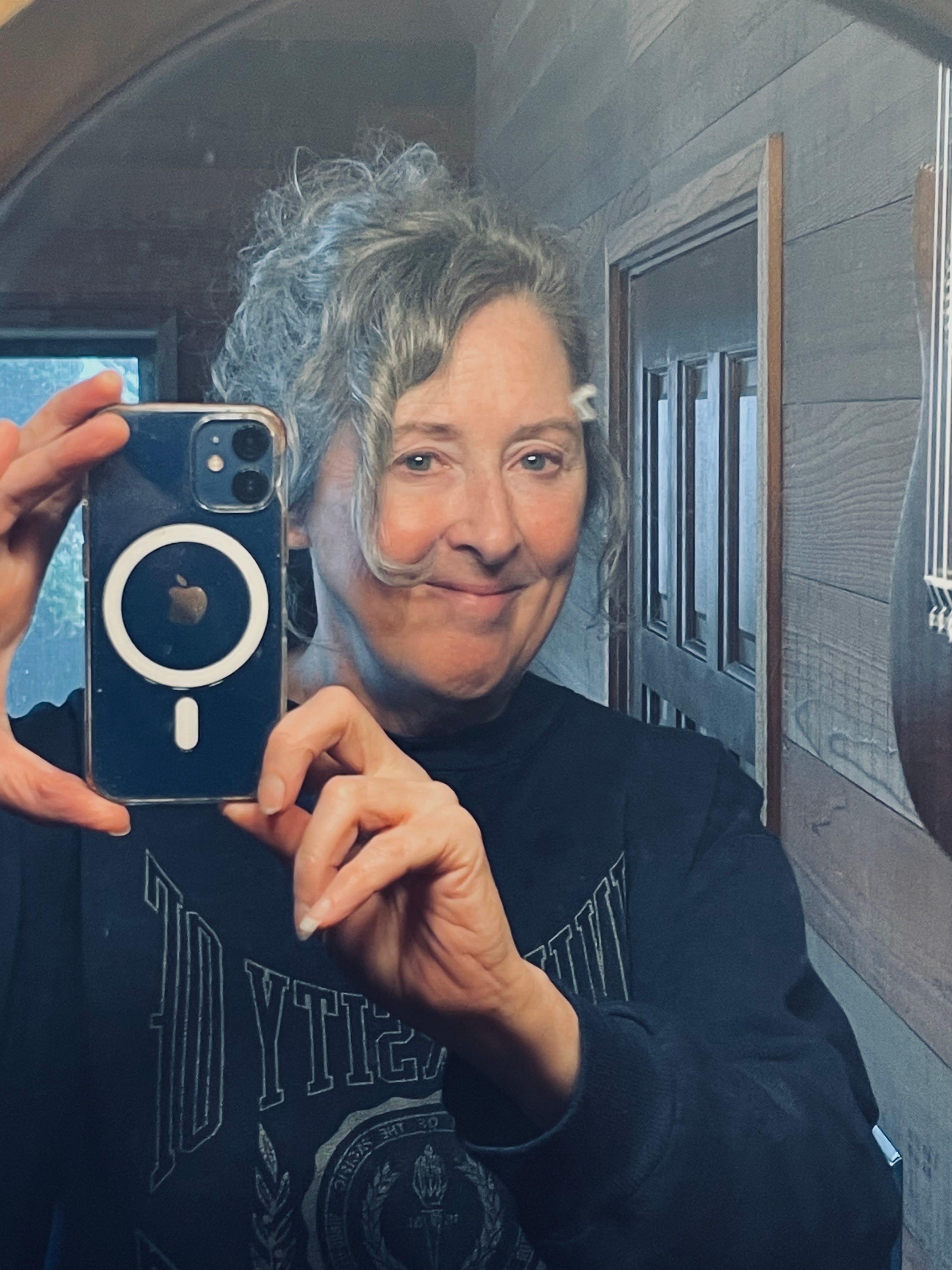
I stopped hennaing my hair since writing this (it is now silver and has grown out).
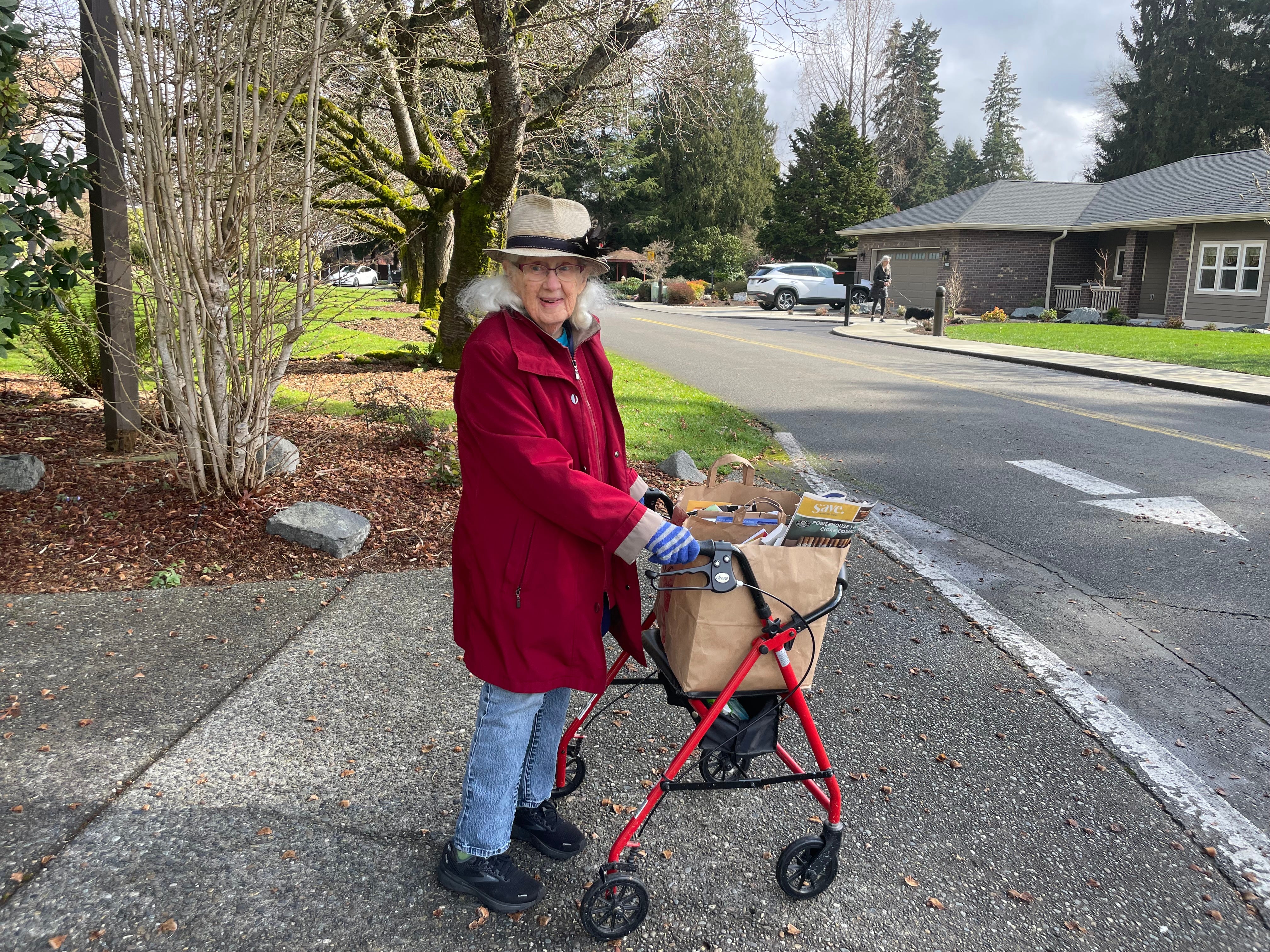
My mother (now 96) is getting sick of fussing with her hair. She says she is very close to cutting off her charming white ponytails, reverting to the “Q-tip” haircut she had before lockdown days. I admit it’s a hard choice to make, because the ponytails do look great with my dad’s hat she loves to wear.
Harriet passed on, but I have taken her advice very seriously in the intervening years as I have continued my work with music and elders. This includes launching “Some Glad Morning” to share stories like this one about these amazing people. (Thank you as always to my paid subscribers for your support!)
Time marches on and other things have changed in the culture (do the kids still use those filters to change their faces on their phones, or is that long gone?), but I feel it still resonates in 2025. Now four years later, it was good for me to read it again and remember these reflections about beauty. I hope it resonates for you too. Please let me know in the comments! I always love hearing from you.
Let’s face it. We all want to feel beautiful and we all unfortunately tie our self-worth, to some extent (hopefully a small extent) to our appearance and perceived level of attractiveness.
We all need constant reminders that there are many types of beauty - and I agree that there is beauty in comfort, in heath, in talent (like your musical ability), in hard work, in compassion (like you show your elderly audiences), in nature, etc.
My way of dealing with the inevitable feeling that we are less attractive as we age is to think of what my 87-year-old self would think of me. I believe she would think I look great! That’s enough to get me out of any obsessing and back to thinking of the many other kids of beauty in life.
I loved this! And I, a fellow, aging brunette, could relate on many levels, including that of watching how my own elderly mother still cares about her appearance. Your work with these elders is so valuable, Elizabeth, and so is your writing.